
The Innkeeper Who Missed His Chance and the Shepherds Who Heard the Angel’s Tidings of Joy – Matthew 2:1-18, Luke 2:1-20
The Innkeeper Who Missed His Chance and
the Shepherds Who Heard the Angel’s Tidings of Joy
Matthew 2:1-18, Luke 2:1-20
On New Year’s Day this past year, we all sincerely prayed to the living God for our families, workplaces, businesses, nation, and people. But things did not turn out as we desired or saw. Understanding our dis heartened feelings, the Savior of all man kind descended from heaven to be born on this earth this morning. About 2,700 years ago, the prophet Isaiah spoke precisely about the mission and purpose of the Messiah’s coming in Isaiah 9:1-7.
Isaiah 9:1-2 But there will be no more gloom for her who was in anguish; in earlier times He treated the land of Zebulun and the land of Naphtali with contempt, but later on He shall make it glorious, by the way of the sea, on the other side of Jordan, Galilee of the Gentiles. The people who walk in darkness will see a great light; those who live in a dark land, the light will shine on them.
In Matthew 1:21, the name “Jesus” means “He will save His people from their sins.” In Matthew 1:23, “Immanuel” means “God is with us.” Many claim to celebrate Christmas, yet they celebrate a distorted Christmas where the holy name of Jesus and the name Immanuel are missing. Today, the members of Pyungkang Cheil Church must restore the lost meaning of Christmas. As believers, we should come before God with a reverent heart, saying, “God loves me so much that He sent the Messiah, Jesus Christ, Immanuel, so now all problems will be resolved!” May this Christmas be a holy one where you receive Baby Jesus into your heart, and I bless you in the name of the Lord.
[ King Herod’s Attitude Toward Christmas]
According to historical records, King Herod was naturally suspicious and cruel. He had as many as 10 wives and fathered 76 children. However, he killed three of his sons with a knife while eating, as well as his wife, mother-in-law, wife, and even his grandfather’s wife, among many others. To eliminate the Sanhedrin, the largest Jewish ruling body, he killed the leaders of the opposing clans and imprisoned the remaining elders. The era of Herod’s rule was one of cruelty and bloodshed. It was during such a time that Jesus was born.
The Magi, after enduring great hardships, went directly to King Herod and asked, “Where is He who has been born King of the Jews?” At this, Herod thought to himself, “But I am the king…” Intending to kill Baby Jesus, he said to the Magi, “Go and search carefully for the Child; and when you have found Him, report to me, so that I too may come and worship Him.” How ever, after the Magi had met the baby Jesus, God revealed to them not to return to Herod. As we see in Matthew 2:12, they took “another way,” a special path prepared by God, allowing them to return safely, as if on a highway.
King Herod, realizing he had been deceived, ordered all boys aged two and under around Bethlehem to be killed. As the prophet Jeremiah had foretold in Jeremiah 31:15, the wailing in Bethlehem shook the heavens. Regarding Herod’s massacre of infants, the prophet Jeremiah said, “A voice is heard in Ramah, lamentation and bitter weeping. Rachel is weeping for her children; she refuses to be comforted for her children, because they are no more.” Matthew 2:16-18 testifies to the fulfill ment of this prophecy.
Ramah, a city of the tribe of Benjamin, was a place of great mourning during the Baby lonian captivity, as many were taken away, beaten, killed, and dragged off to Babylon. Then King Herod also carried out the mas sacre of children. With all the local children murdered, every home was filled with tears, groans, and wailing. Although children under two years old were murdered for Jesus’ sake, He was born in Bethlehem to drive out the darkness and save the oppressed people.
How evil was King Herod’s heart, so filled with hatred for Jesus that he sought to kill Him? He could not recognize that Jesus had come as the Savior to save and give him life. During his 37 years as king of Judea, Herod’s reign was marked by a history of consistent murder. In the end, he met a miserable death.
[The Attitude of the Magi]
In Numbers 24:17, it is written, “I see him, but not now; I behold him, but not near; a star shall come forth from Jacob, a scepter shall rise from Israel, and shall crush through the forehead of Moab, and tear down all the sons of Sheth.” Just as this prophecy was made hundreds or even a thousand years earlier, the star foretold in the prophecy became the focus of the Magi’s spiritual sight.
Many scholars saw the same star that the Magi saw. The many priests and scribes studying the Bible also saw it. However, the focus in Numbers 24:17 was on the Magi. Our spiritual lives will also become scattered if it has no focus. In Matthew 2:1 and the following, although many people saw the star, it was the Magi who, having studied the Scriptures, recognized the star of the baby Jesus, the King of kings, foretold by the prophet thousands of years before. Indeed, whenever we celebrate Christmas, we cannot leave out this star in our homes or churches.
The Magi saw the star and stopped their work for over two months to journey on camels for over 900 miles, enduring great hardships, and finally came and worshiped the King of kings, Jesus. They stopped all their duties, faced danger, suffered hard ships, made sacrifices, spent all their resources, and endured mental anguish. Yet through it all, they rejoiced. This is no or dinary faith.
The Magi also brought gold, frankincense, and myrrh. Gold is a gift given to a king and symbolizes faith. Frankincense was sprinkled on priests during their consecration ceremony in Exodus 30. Myrrh is a preservative and perfume used for embalming the dead. The Magi did not miss the opportunity to present these three gifts. At this time, Jesus had not even been born for a full day. Yet in great faith, these three individuals, who were almost like national leaders, bowed down in reverence before the baby Jesus, worshipping Him as they presented Him the gifts of gold, frankin cense, and myrrh.
[The Attitude of the Shepherds]
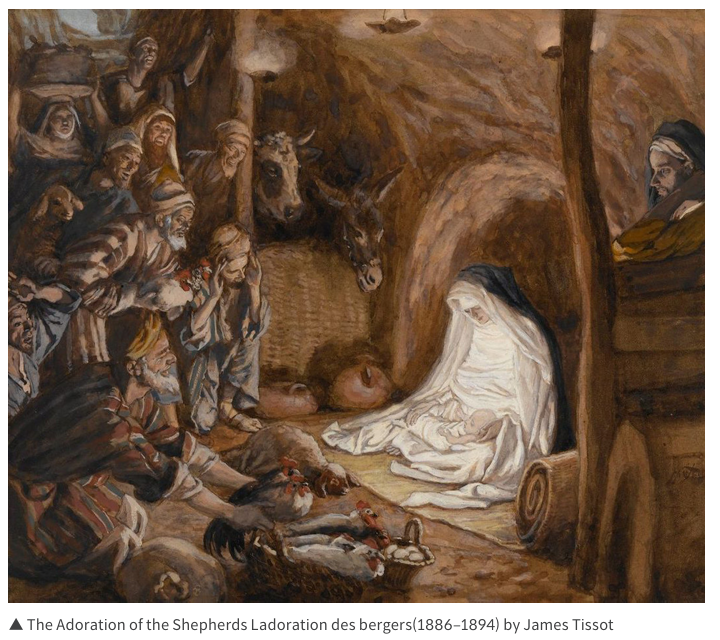
At that time, shepherds were poorly-treated laborers. They lived alongside animals, moving around and setting up tents along the water and the valleys. There were 24,000 religious leaders, many wealthy people, intellectuals, and people in power. And yet the angel did not appear to them, but to the shepherds. The angel told them, “A great joy for all the people has been born in the world, a Savior, so go quickly to that place and see Him.” This is recorded in Luke 2:9-14
In the books of Daniel and Revelation, when we look at the angels in heaven, there are not just one, but millions upon millions of them. When the angels raised their voices in heaven, the shepherds did not doubt but went. According to the Bible, they went quickly. The shepherds’ faith was an “immediate” faith. Therefore, their faith was great. As they had no possessions, they also had no greed. They lived simple and devout lives, working hard. God needed to announce the birth of Jesus to the people of this world, but the way they were waiting for the Messiah was misguided. But the shepherds lived ordinary, truthful, and honest lives of faith. So God came to those shepherds
In Philippians 2:5 and the following, it is written that when Jesus came to this earth, though He was in the very nature of God, He did not consider equality with God something to be grasped, but emptied Himself completely. He came as an empty vessel to contain people like me, utterly corrupt and broken. Starting from today, we must completely empty ourselves. Our lives of faith must also be ordinary, truly sincere, without deceit, and honest. Furthermore, Jesus came to this earth and worked until the very end. He says in John 5:17, “My Father is working until now, and I Myself am working.” When we, the saints, welcome Christmas into our hearts, the Word of God (the Bible) and Jesus must first dwell in us. Therefore, just like God the Father who is still working, we too must have tools in our hands.
[The Attitude of the Innkeeper]
Without any effort or work from the innkeeper, Jesus, the King of kings, had come to him. How great of a blessing that was! But the innkeeper sat idly in his house, unaware that eternal blessings had arrived. Seeing the elderly Joseph, the earthly father of Jesus, and pregnant Mary, the mother of Jesus, he worried that this poor family would disturb the other guests if the baby were born under his roof. He missed the opportunity to welcome and embrace the eternal Lord of life, the Creator, the giver of eternal life, and the King. Many people are too busy building the “Tower of Babel” in their duties, shining glory on themselves. However, without Jesus, it is all in vain. As Proverbs 10:22 says, “It is the blessing of the Lord that makes rich, and He adds no sorrow to it.” But wealth outside the Lord is sorrow-filled. The innkeeper was the kind of person who piled up worry-filled wealth outside the Lord. Are we each reflecting on where we are? Where am I going? What am I focused on? What am I doing, racking my brain with worry?
According to the Bible, we are walking on an uncertain path for our lives. Regardless of whether other people acknowledge it, we must live the life that God acknowledges. The most important thing in our lives is what God has entrusted to us. Yet we are walking down this uncertain path without realizing it. Today, there are many times when we say we are busy with our daily work that we forget things and miss out on more important matters. So much so that Philippians 1:21 tells us that everyone is busy and faithful to their own work, but have no interest in God’s work.
How pitiful is the innkeeper who did not recognize Jesus and brought about such a tragedy! Could he not even offer the bare minimum of recognition? Although God’s mysterious world visited his household, the innkeeper, like a blind man with open eyes, could not see it. Today, we Pyungkang members must praise, rejoice, and give thanks for Christmas with joy. Even if Jesus were born a million times on this earth, it means nothing if He is not truly born in my heart.
Why should we rejoice, be glad, and give thanks? Because He came to seek and save the lost. God lost us because of our sins. As we see in Luke 15:6, 9, 24, and 19:10, the Son of Man came to seek and save the lost. How thankful we should be! Moreover, as prophesied in Jeremiah 33:8-9, He came to forgive sins. How joyful were we when Jesus said, “Daughter, take heart, your faith has saved you,” and forgave her sins? When there is sin, there is no peace, only conflict.
Jesus came to this earth to give us joy through faith, grace, and His Word. Therefore, our salvation is eternal. The effect of atonement is also eternal. As we see in Hebrews 9:15, the joy of the sacrifice offered by the Priest and the inheritance of heaven given by God are eternal. Furthermore, as we read in Daniel 2:44 and Hebrews 12:28, the kingdom of God is eternal. And Hebrews 13:20 records that the covenant of God’s Word is unchanging and eternal.
I will now conclude.
Our Christmas must be a true Christmas. It must not be a Christmas aimed at pleasing others or trying to match the atmosphere. We must earnestly pray, “God, please bless me so that before this year ends, I may experience the true Christmas in my heart.” We must keep the truth of Christ mas in our hearts. In order for Christmas to bring glory to God and peace to the world, the church must have a noble mission and testimony to present before the people. Therefore, the church must become the great birthplace of peace for mankind.
So even if we forget everything else in the world, even if we have nothing, God’s church must remain. A church that celebrates the birth of Jesus must have God present. Though the things of the world may perish, the church will not perish. This is the consistent message of God’s Word in both the Old and New Testaments. A church that lacks the vision of God’s glory and peace, and does not cherish the truth of Christmas, will perish. Therefore, even if we forget everything else in the world, through the Word given to our hearts on this holy Christmas day, I pray that we will welcome Jesus like how the Magi, the shepherds, and the saints welcomed Him. May we receive Jesus so that He does not go elsewhere but enters into our hearts and stays with us forever and ever, that we may receive the blessing of Immanuel. I pray this in the name of the Lord.
Let us pray.
Jesus! To break the power of death and completely abolish sin, You did not consider equality with God as something to be grasped, but emptied Yourself and became a servant to save us, and was born as a baby on earth (1 John 3:9)! We have realized this through the Word You have given us. So on this Christmas day of the year 2000, please bless all the believers in Pyungkang, and every family in every home and household, so that they can celebrate Christmas in their hearts.
Until we enter Your kingdom, where we never lose sight of You, forget You, or live a life of faith that says we don’t know You. No matter what happens, may we be able to testify of You, our Christ, and boast of You, and may Your presence live in our hearts on this holy Christmas.
Living God, we believe that You have blessed our hearts to experience the birth of Christ by faith, and we truly give thanks, praise, honor, and glory to You. We will rejoice and be glad. We will offer praise and thanksgiving. May the Holy Spirit work in us to keep these things in our hearts, and may He guide us until we enter Your kingdom.
We pray all this in the holy name of Jesus, and offer this prayer of thanksgiving. Amen.
December 25, 2000 (Mon)
Christmas Sermon